Getting Unstuck the Right Way: The Recovery Gear Mistakes That Are Costing You Big
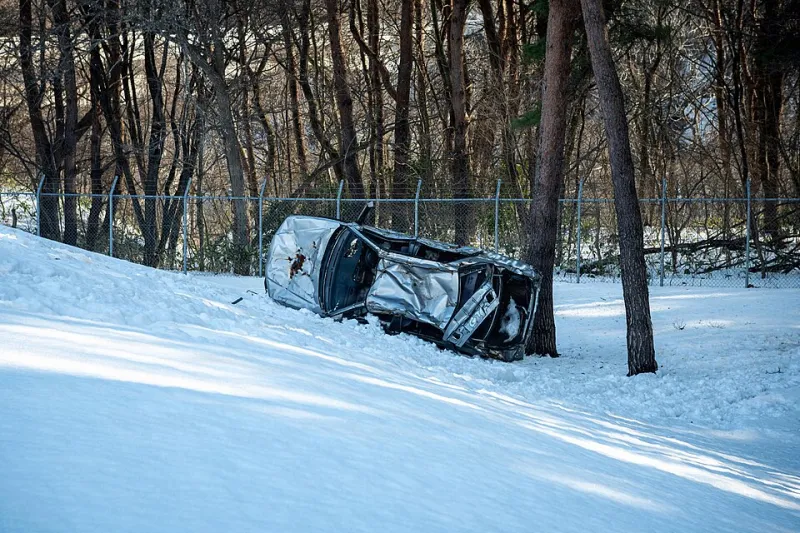
Photo: U.S. Air Force photo by Airman 1st Class Hannah Bench, Public domain, via Wikimedia Commons
Every off-roader eventually gets stuck. It's not a failure — it's practically a rite of passage. But how you get yourself out is where the gap between prepared and unprepared becomes very real, very fast. The recovery gear market is flooded with products that look the part, carry impressive-sounding specs, and move units because they're priced right at the impulse-buy threshold. The problem? A lot of it is wrong for the job, or it's installed in ways that turn a bad situation into a dangerous one.
We spent time talking with recovery professionals — including a certified 4WD trainer from Colorado and a trail rescue coordinator who's worked extraction incidents across the Southwest — to get a straight answer on what actually matters when you're buried to the frame in a Utah mud pit or high-centered on a granite ledge in the Cascades.
The Winch Math Most People Get Wrong
Winches are the crown jewel of the recovery setup for most serious wheelers, and they're also where some of the most expensive mistakes happen — both in purchasing and in use.
The common advice you'll hear is to buy a winch rated at 1.5 times your vehicle's gross vehicle weight rating (GVWR). That's a reasonable starting point, but our Colorado-based trainer, who runs a 4WD certification program for new off-roaders, pushes back on treating it like a hard rule.
"People buy the 9,500-pound winch for their half-ton and think they're set," he told us. "Then they get buried in soft mud on a side slope, and they're pulling at an angle with a single-line setup, and they're asking that winch to do three times what it's rated for in ideal conditions. The rating on the drum is at the outermost layer of cable — the more line you spool out, the less pulling power you actually have."
The fix: understand your winch's actual line pull at different spool depths, use a snatch block to double your pulling power when the situation calls for it, and — critically — don't cheap out on the winch itself. Entry-level winches from unverified brands might carry the right numbers on paper, but the internal components, thermal protection, and motor quality often don't survive sustained pulls under real load.
Synthetic rope versus steel cable is another area where opinions run hot. Synthetic is lighter, safer when it snaps (it drops rather than whipping), and easier on your hands. Steel is more abrasion-resistant in rocky terrain. Most professional trainers today lean toward synthetic for general trail use, with the caveat that you inspect it regularly for fraying and keep it clean.
Kinetic Straps vs. Tow Straps: They Are Not the Same Thing
This one causes genuine accidents, and it comes up constantly in recovery circles.
A kinetic energy recovery rope (KERR) — brands like Bubba Rope and ARB make popular versions — is designed to stretch under load, storing energy like a rubber band and releasing it to help yank a stuck vehicle free. This elasticity is the whole point. It reduces shock loading on both vehicles and dramatically increases the effectiveness of a momentum-based recovery.
A standard tow strap or tie-down strap has no meaningful stretch. Using one as a kinetic recovery rope transfers the full shock load of a moving vehicle's momentum directly into both recovery points at the moment of tension. That's how you rip a recovery hook out of a bumper, snap a strap violently across a hood, or worse — send hardware flying toward the people standing nearby.
"I've seen D-rings become projectiles," said the trail rescue coordinator we spoke with, who asked to remain anonymous. "People see a strap, they hook it up, and they don't think about what happens when 6,000 pounds of truck hits the end of a non-stretch strap at 20 miles an hour. It's not a recovery. It's a catapult."
Buy the right strap for the right job. Keep both in your kit if you need them. Label them if you have to. And never, ever use a ratchet tie-down for vehicle recovery — ever.
Shackles: Where the Numbers Actually Matter
Bow shackles (the U-shaped ones) and screw-pin shackles are everywhere in recovery kits, and the quality range is enormous. A 3/4-inch shackle from a reputable rigging manufacturer like Crosby or Van Beest carries a working load limit that's been tested and certified. A 3/4-inch shackle from a random kit on a major retail site might share the same dimensions and absolutely nothing else.
The rule of thumb from recovery professionals: buy shackles from brands that publish their working load limit (WLL) and breaking strength separately, and verify those numbers are certified — not just claimed. For most full-size truck recoveries, you want shackles rated to at least 4.75 tons WLL. The screw pin should be moused (secured with wire or a zip tie) so it can't back out under vibration during a pull.
Soft shackles — made from high-strength Dyneema fiber — have become increasingly popular as an alternative. They're lighter, don't become dangerous projectiles if they fail, and are surprisingly strong for their size. They're not a universal replacement (they can be damaged by sharp edges and aren't ideal in all anchor configurations), but for many standard recovery points, they're a smart addition to the kit.
Anchor Points: The Part Everyone Assumes Is Fine
You can have the right winch, the right rope, and the right shackles, and still have a recovery go badly wrong because of where you attached everything.
Factory recovery hooks and tow hooks on most trucks are not created equal. Some are rated for recovery loads. Many are rated only for towing on a flat surface — a meaningfully different scenario. Check your owner's manual and look for stamped ratings on the hardware itself. If you're serious about trail use, aftermarket recovery points from companies like Factor 55, ARB, or Warn that bolt to your frame are a more reliable option.
Anchor points on the assisting vehicle matter just as much. Attaching a kinetic rope to a trailer hitch ball is a well-documented way to turn that ball into a missile. Always use a rated receiver hitch shackle or a dedicated recovery hitch attachment — never the ball itself.
For winch anchors in the field, a ground anchor (sometimes called a deadman anchor) or a tree-saver strap around a healthy tree are your best options when there's no natural anchor in the right position. The tree saver protects the bark and distributes load properly; never wrap your winch line directly around a tree.
The Gear List That Actually Makes Sense
Here's a practical baseline kit that recovery professionals actually recommend:
- Kinetic recovery rope rated to at least 2x your vehicle's weight
- Rated bow shackles (2-3 minimum, with matching WLL to your rope)
- Snatch block for doubling winch line pull
- Tree saver strap (2-inch minimum width)
- Rated recovery points front and rear on your vehicle
- Heavy recovery gloves — synthetic rope still generates friction heat
- Dampener or recovery blanket to lay over the line during pulls
- A basic understanding of what you're doing — which sounds obvious until it isn't
That last point isn't a dig. Recovery techniques have real nuance, and a half-day course from a certified 4WD training organization is genuinely worth your time and money. The Tread Lightly! organization and NAXJA (North American XJ Association) are good starting points for finding reputable training in your region.
Final Word
Getting your recovery kit right isn't about spending the most money. It's about buying the right things, understanding what they're rated for, and knowing how to use them before you need them. The trail has a way of exposing gaps in preparation at the worst possible moment — and recovery gear failures don't just cost money. They cost safety.
Do the homework. Buy rated gear from reputable sources. And if you're not sure how to use something, find out before you're stuck in a canyon at dusk with a storm rolling in.