Nobody Hands You the Rulebook at the Trailhead: Etiquette That Keeps Our Loops Open
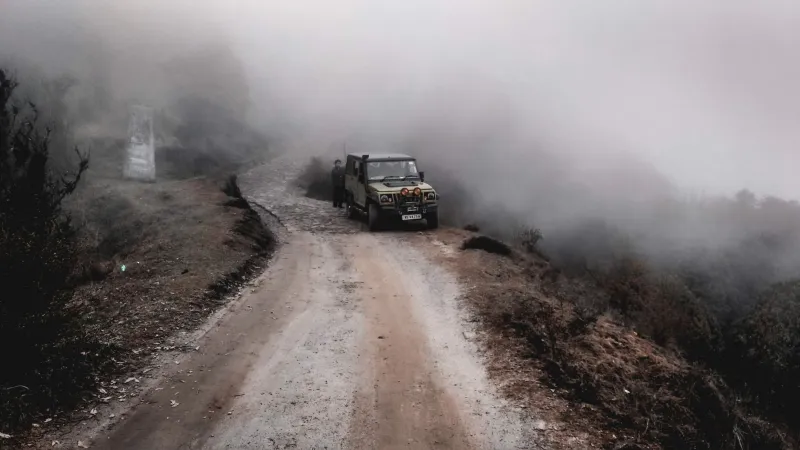
There's no sign at the trailhead listing them. No video you have to watch before your first group run. But every experienced wheeler out there knows the same set of unwritten rules — and when somebody breaks them, it's rarely the rule-breaker who pays the price. It's the trail.
Land managers across the US, from the Forest Service districts in Colorado to BLM field offices in Utah and Arizona, have closed or restricted 4x4 routes over behavior that was 100% preventable. Johnson Valley, Moab's more sensitive routes, sections of trail in the San Bernardino National Forest — every closure fight usually traces back to the same handful of bad habits. Here's how to not be that guy.
Yielding Isn't a Suggestion, It's a Hierarchy
The classic rule: vehicles coming downhill yield to vehicles climbing uphill. Gravity wins, and restarting on a steep pitch is where rollovers and drivetrain damage happen. If you're pointed down and you see a rig working up toward you, back up or pull into the last wide spot you passed.
Beyond that, there's a general pecking order most wheelers follow: hikers and mountain bikers get the right of way, then horses (always horses — they're unpredictable and you do NOT want to spook one), then the faster vehicle yields to the slower one. A stock crossover puttering down a shelf road? Let them have it. You can wait ninety seconds.
Water Crossings: Tire-In, Tire-Out, No Exceptions
This one gets people in real trouble. At a water crossing — especially in riparian zones — you drive in and out at the same speed, the same line, and the same entry and exit points. No rooster tails. No stopping mid-creek for a photo. No finding your own "better" line twenty feet downstream.
Why? Because silt clouds smother aquatic habitat, and every new entry point you carve becomes the start of a new braided channel. It's one of the fastest ways to get a route flagged by the Forest Service. Slow, steady, straight through. That's it.
Don't Create Your Own Bypass
If the mud pit is too deep, if the rock ledge is too tall, if the washout looks sketchy — you go around on the trail, you wait, or you turn back. What you don't do is drive off the existing route to skirt the obstacle.
Every bypass cut around an obstacle is a visible scar that shows up in aerial imagery land managers literally use when reviewing route designations. Multiple bypasses around a single obstacle is one of the most common triggers for a full route closure. Take the bypass of pride instead: winch, strap up, or come back with a better rig.
Group Run Rules That Keep Everyone Welcome
Group runs amplify everything — fun and mistakes. If you're joining your first one, a few things will make you instantly welcome:
- Show up fueled, aired, and recovered-ready. Show up late and you'll wait; show up unprepared and someone else becomes your support vehicle.
- Keep the rig behind you in sight. You never make a turn without confirming the vehicle behind you saw it. That's how people get lost.
- Hold spacing on dust and hills. Close enough to keep the group together, far enough that a mistake doesn't domino.
- Communicate on the radio, not just hand signals. "Oncoming, hold at the wide spot" beats a shrug at a blind switchback every time.
- Pack out what you pack in — including everyone else's trash if you find it. Trail clean-up culture is what keeps access committees on our side.
The Quick-Reference Do's and Don'ts
Do:
- Air down before the trail, air up before pavement
- Stay on the designated route, even when it's rough
- Yield to uphill traffic, hikers, and equestrians
- Cross water straight and slow
- Say hi to other users — a friendly wave goes further than you'd think
Don't:
- Don't cut switchbacks or make new lines around obstacles
- Don't spin tires for show — it chews terrain and looks terrible
- Don't block the trail at a lunch stop; pull fully off at established spots only
- Don't wheel closed routes "just this once" — closures are often seasonal for wildlife
- Don't leave a stuck rig unattended without telling someone in your group
Why Any of This Matters
The uncomfortable truth is that access in the US is a privilege that gets revoked by behavior, not by policy alone. Trail advocacy groups spend thousands of volunteer hours and grant dollars keeping loop runs open — and one weekend of braided crossings, cut fences, and ditch-litter can undo years of that work.
Wheel respectful, run with people who do the same, and the trails stay open for the next rig on the list. That's the whole code.