Every Used Rig Has a Rap Sheet: The 12-Point Inspection Before You Shake Hands on a 4x4
There's a special kind of amnesia that kicks in when someone lists their truck for sale. The Moab trip where the rear bumper became a rock anchor? Never happened. The lift kit installed in a driveway with hand tools and optimism? Suddenly it's "professionally done." The used overlander market is full of honest people selling honestly worn-out trucks and dishonest people selling the same thing for more money. Your job is figuring out which is which before you hand over the cash.
Here's the twelve-point ritual we run on any used rig — whether it's a bone-stock Tacoma with 60k miles or a 4Runner wearing three owners' worth of mods.
1. Read the Undercarriage Like a Diary
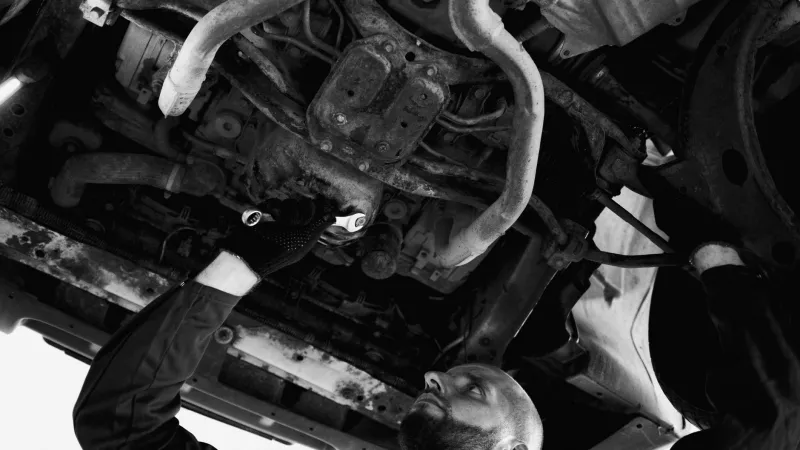
Get on your knees. Bring a flashlight and maybe a mechanic's creeper if you're fancy. The underside tells the truth the photos won't.
Look for fresh undercoating or spray-on bedliner slathered on the frame. Some of that's legitimate rust prevention — a lot of it is covering up flaking scale or a crack that's been gooped over. Scrape gently with a screwdriver in a hidden spot. If the "coating" peels away to reveal orange-brown flakes, walk or renegotiate hard.
Also note the skid plates. Dinged-up skids with fresh scrapes mean the truck's been used — that's not automatically bad. A trail rig with scarred armor and a clean bill of health underneath is often a better buy than a mall crawler with rot hiding under pretty paint.
2. Check for the Half-Finished Build
The most dangerous used rig isn't the abused one — it's the abandoned project. Sellers run out of money, patience, or garage space, and you inherit the mess.
Signs to hunt for: a lift in the front with stock rear springs (or vice versa), an aftermarket bumper with the factory crash bar still zip-tied behind it, wiring that dead-ends into electrical tape, a snorkel with no corresponding airbox mod. Mismatched brands across the suspension — shocks from one company, springs from another — suggests parts were replaced piecemeal as they failed, or worse, as they were installed wrong.
3. The Lift Install Audit
A lift done right is invisible. A lift done wrong will eat your drivetrain and your wallet.
Crawl under and look at the following:
- Drop brackets and control arms — are the bolts new hardware or re-used factory stretch bolts?
- Brake lines and ABS wires — extended, or stretched tight with a zip tie "fix?"
- Driveshaft angles — look for fresh transfer case or differential seal leaks, the classic symptom of a lift installed without correcting pinion angle.
- Bump stop contact — clean contact marks on the bump stops mean the suspension actually cycles. Paint marks or none at all means it may be maxed out or coil-bound.
4. Fluid Colors, Not Fluid Levels
Anyone can top off fluids the morning of a sale. You're looking at color and consistency. Gear oil should be amber to brown, not milky (water intrusion) or glittery (metal shavings). Diff fluid that smells burnt has been working hard — possibly too hard. Pull the transfer case fill plug if the seller will allow it; a magnet coated in fuzz is a red flag the size of a dinner plate.
5. Tire Forensics
Tires tell you how the truck was driven and how it was maintained. Uneven wear — choppy scalloping on the edges — points to worn steering components or a lift that never got an alignment. Cupping suggests dead shocks. And check the date codes: a set of $2,000 tires with cracked sidewalls means the rig sat, and sitting rigs have sitting problems everywhere else too.
6. Frame Touch Points: Rust Where It Counts
Beyond the general undercarriage scan, put your fingers on the specific spots that kill trucks: the frame just behind the front wheels, the body mounts, brake line runs, and the rear spring hangers. In the Rust Belt — Michigan, Ohio, upstate New York — this section alone can kill a deal. Surface rust is normal. Flaking, scaling, or a screwdriver that sinks in is not.
7. Steering Play Test
On a test drive, find an empty straight road at 45 mph and loosen your grip slightly. The wheel should stay basically put. Constant correction means worn tie rods, a sloppy steering box, or a bad alignment from that questionable lift. Then do a slow, full-lock turn in a parking lot and listen — clunks and pops from a lifted front end mean CV joints or ball joints on borrowed time.
8. Electrical: Follow the Wires
Aftermarket accessories mean aftermarket wiring, and aftermarket wiring is where weekend installs go to die. Check behind the bumper, under the dash, and along the firewall. Look for fused connections (good), scotch locks and crimped splices jammed into the fuse box (bad), and any wire that's been extended with household extension cord material (run away).
9. The Cold Start
Show up early or ask the seller not to warm it up. A cold start reveals the tick of a lazy lifter, the rattle of a timing chain, and the blue haze of a rig burning oil. Once it's warm and idling, pop the hood and listen for vacuum leaks — a hissing 4x4 is an expensive hiss.
10. Recovery Point and Bumper Mounting
Grab the bumpers and shake them. Hard. If the mounting points flex or the bolts are half-threaded into sheet metal, the whole recovery setup is suspect — and that tells you something about every other install on the truck.
11. Paper Trail Archaeology
Carfax is a start, not a finish. Ask for service records, receipts for the build, and the title history. A folder of receipts from an actual shop is worth thousands. "I did it all myself, it's real clean" is worth what you can verify. Match the VIN on the title, the door jamb, and the frame — rebuilt or washed titles are common on trucks that were rolled or flooded, and both are overlander kryptonite.
12. The Seller, Not Just the Truck
Ask one question: "Where have you taken it?" A seller who lights up talking about trails and offers honest wear stories is usually a good sign. A seller who says "it's never been off-road" while standing next to a truck with chopped-up skid plates and a dent in the rear axle is telling you the first lie of many.
Turning Findings Into Dollars
Everything on this list is leverage. A lift installed without extended brake lines is a $300 fix and a safety issue — that's $1,500 off the asking price in most markets. Milky diff fluid plus a magnet full of shavings is a rebuilt axle at minimum. Get quotes before you negotiate, put them in front of the seller, and be willing to walk. There are more used rigs listed every single day, and the one that gets away is always cheaper than the one that strands you.
Buy the truck that's been used and maintained, not the one that's been parked and polished. Out here, the scars are the story — you just need to know how to read them.