Why Your Budget Suspension Lift Is Setting Your Rig Up to Fail
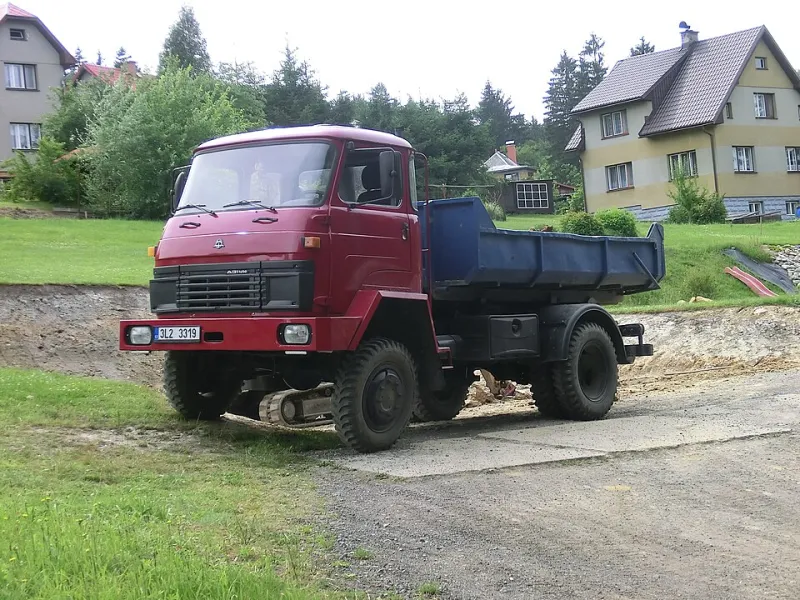
Photo: Jiří Erben, CC BY-SA 3.0, via Wikimedia Commons
There's a moment every new off-roader knows well. You've finally got the budget scraped together, you've found a lift kit online for a price that feels almost too good, and you're already picturing your truck clearing rocks it couldn't touch last season. It's a great feeling — right up until something starts clunking at 40 miles an hour, your tires are cupping, and a mechanic is quoting you three times what you spent on the lift in the first place.
Suspension is one of those areas where the off-road community tends to learn the hard way. And that's a shame, because understanding a few fundamentals before you spend a dime can save you from a chain reaction of expensive failures that starts with one mismatched component.
The Problem With Mixing and Matching on a Budget
Let's start with the most common scenario: someone buys a budget spacer lift or a basic coilover kit, throws on a set of taller tires, and figures they're done. The truck sits higher, looks meaner, and seems to handle the local forest service roads just fine. For a while.
What's happening underneath, though, is a geometry problem. When you raise a vehicle's ride height without correcting the control arm angles, upper and lower ball joints start operating outside their designed range of motion. On a stock suspension, those angles are calculated to keep wear even and predictable. Lift the body without compensating — say, with adjustable control arms or corrected upper ball joints — and you're accelerating wear every single time the suspension cycles.
On technical terrain, your suspension is cycling constantly. Rocky trails, ledges, and off-camber slopes are exactly where that accelerated wear becomes catastrophic wear. A ball joint that might last 80,000 miles on a street-driven truck can fail in a fraction of that time when it's working at the wrong angle on rough ground.
Spring Rate Isn't Just a Number on a Box
Here's where things get a little technical, but stick with it — this part matters. Spring rate refers to how much force is required to compress a spring by one inch. Too soft, and your suspension bottoms out under load or during hard articulation, slamming components against their limits. Too stiff, and the wheels can't follow the terrain, reducing traction exactly when you need it most.
Most budget lift kits are built to a one-size-fits-all spec. They're designed to fit a stock, unloaded truck and look good in photos. The problem is that off-road rigs are rarely stock and rarely unloaded. If you're running a steel bumper, a winch, a roof rack, and a full load of recovery gear — which adds up to several hundred pounds in the front alone — a spring rate designed for a stock configuration is going to sag, wallow, and bottom out.
For a rig that runs moderate trails with a moderate load, a spring rate in the neighborhood of 200–250 lb/in up front and 150–200 lb/in in the rear is a reasonable starting point for a mid-size truck. But those numbers shift depending on your actual payload, your wheel travel goals, and the type of terrain you frequent. Rock crawlers typically want softer rates for maximum articulation. High-speed desert runners want stiffer rates to handle big hits without bottoming. There's no universal answer, which is exactly why a universal cheap kit so often gets it wrong.
Damping: The Part Everyone Forgets
Spring rate and shock damping have to work together. A shock absorber's job is to control how fast a spring compresses and rebounds — slow it down enough to keep the wheel in contact with the ground, but not so much that the suspension packs down and stops working mid-trail.
Budget shocks are typically valved for on-road comfort or for a generic off-road application. They're not tuned to match the spring rates they're paired with, and they're almost never adjustable. When spring and damping rates are mismatched, you get one of two failure modes: the suspension bounces uncontrollably because the shocks can't keep up, or it rides like a pogo stick because the damping is way too stiff for the spring. Either way, traction suffers, and the added stress on every bushing, joint, and mount in the system adds up fast.
Quality adjustable shocks — brands like King, Fox, or Bilstein's performance line — let you dial in compression and rebound to match your spring setup and trail style. Yes, they cost more upfront. But they also last longer, perform better, and don't force you to replace your entire front end two seasons in.
The Cascading Failure Nobody Warns You About
Here's the real cost of a cheap suspension setup: it's not just the components themselves. When geometry is off and components are mismatched, everything downstream pays the price. Tires wear unevenly — and a set of quality all-terrain tires can run $1,200 or more. CV axles see stress they weren't designed for and fail mid-trail. Steering components wear faster, leading to vague handling and eventually dangerous play in the wheel. Wheel bearings take on lateral loads they can't handle.
A $500 budget lift can easily trigger $2,000 to $4,000 in downstream repairs within two or three seasons of regular trail use. Meanwhile, a properly spec'd, matched suspension setup from a reputable manufacturer — with corrected geometry, appropriate spring rates, and quality damping — often runs $1,500 to $3,000 installed, and it'll last the life of the vehicle if you maintain it.
What to Actually Look For Before You Buy
When you're shopping suspension components, ask these questions before pulling the trigger:
- Does this kit include geometry correction? If it's a control arm lift, are the arms adjustable for caster and pinion angle? If it's a coilover or spacer setup, are corrected upper control arms part of the package?
- What spring rate is included, and does it match my actual loaded weight? If the manufacturer can't tell you, that's a red flag.
- Are the shocks valved to match the included springs? Better yet, are they adjustable?
- What's the warranty and the manufacturer's support like? Budget brands often disappear when you need help.
Talk to a shop that specializes in off-road builds, not a general tire-and-lube chain. Bring your actual build spec — weight, intended use, tire size, and the terrain you run. A good suspension shop will ask all these questions before recommending anything. If they don't, find a different shop.
The Bottom Line
Suspension is the foundation of everything your rig does on the trail. It's what keeps your tires on the ground, protects your drivetrain from abuse, and makes the difference between a vehicle that handles technical terrain with confidence and one that limps back to the trailhead with something broken. Cutting corners here doesn't save money — it just delays the bill and makes it bigger.
Invest in understanding what your rig actually needs. Buy the best matched components you can afford, even if that means waiting another season to do it right. Your truck — and your wallet — will thank you for it.