Not All Knobs Are Created Equal: Matching Your Off-Road Tires to the Terrain You Actually Drive
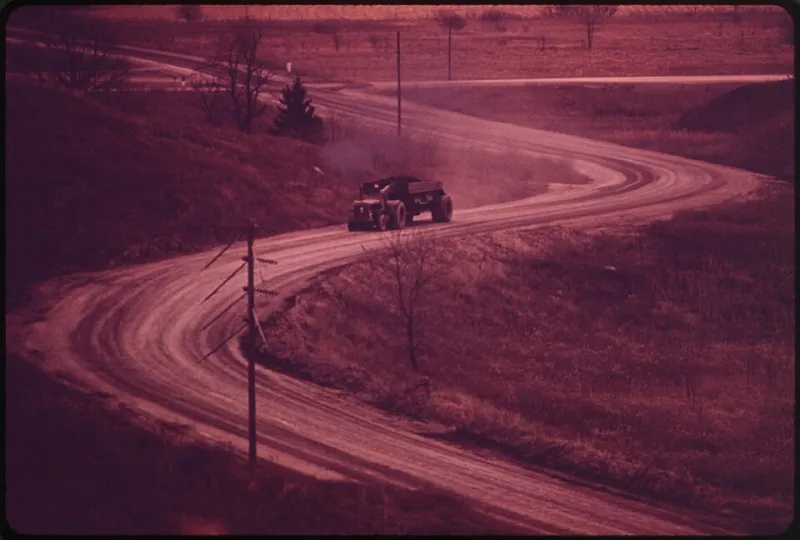
Photo: Erik Calonius, Public domain, via Wikimedia Commons
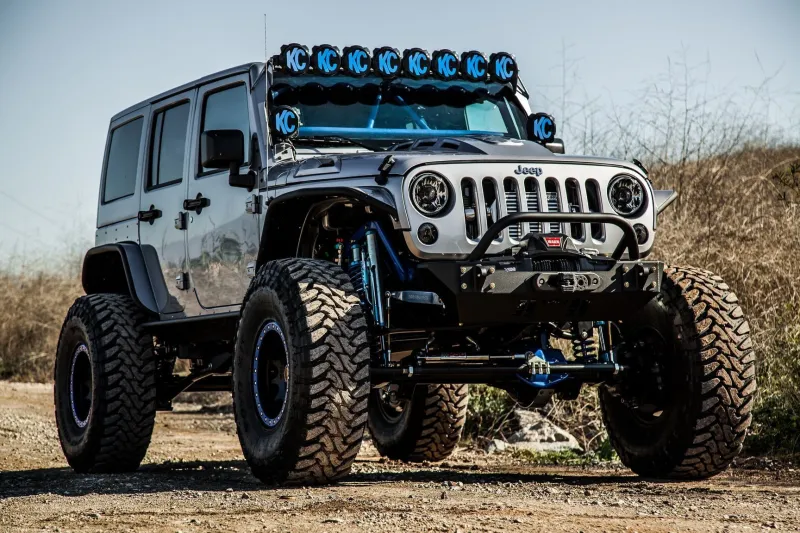
There's a certain kind of truck you see in every trailhead parking lot — lifted, beefy mud-terrains, looks like it could chew through a swamp. Then you watch it spend twenty minutes slipping sideways on a granite slab in the Rockies while a stock Tacoma on all-terrains walks right past it. Tires matter. But not just which tires — why those tires for that terrain.
If you've been staring at tire catalogs and getting lost in the specs, you're not alone. The off-road tire market is massive, the jargon is thick, and the marketing will have you believing every option is the ultimate do-it-all solution. Spoiler: it's not. Let's break it down by terrain type, because that's the only framework that actually matters when you're making this call.
Understanding the Three Big Variables
Before we get terrain-specific, it helps to understand what you're actually comparing when you look at two different tires side by side.
Tread pattern is the most obvious one — the shape, depth, and spacing of the knobs. Wide voids between aggressive lugs help shed mud and soft material. Tighter, more uniform patterns give you more rubber contact on hard surfaces, which translates to better grip on rock or packed dirt.
Sidewall construction is often overlooked by first-time buyers. A reinforced sidewall with multiple ply layers resists punctures and cuts — critical when you're scraping against sharp rock edges or crawling through brush. It also affects how the tire deforms under aired-down conditions, which is a huge deal for traction.
Rubber compound is the sneaky variable. A harder compound lasts longer on pavement but won't conform to irregular rock surfaces the way a softer compound will. Some premium tires use a dual-compound construction — harder in the center for highway wear, softer on the outer edges for off-road grip. You pay for that engineering, but it's worth it if you split time between trail and commute.
Rocky Terrain: The Case for All-Terrains (and Why Compound Wins)
If your weekends look like Moab, the Rubicon Trail, or the rocky switchbacks of the Black Hills, you need a tire that can grab rather than dig. Counterintuitively, an aggressive mud-terrain with huge open voids can actually perform worse on rock because there's less rubber making contact with the surface.
All-terrain tires with a medium-depth tread, tight shoulder lugs, and a softer compound tend to dominate here. When aired down to 15–20 PSI, the tire footprint spreads out and the compound conforms to the rock, creating a suction-cup effect that's surprisingly effective. Look for tires with reinforced 3-ply or higher sidewalls — a sidewall puncture on a remote rocky trail is a miserable situation.
Budget pick: BFGoodrich All-Terrain T/A KO2 — it's been the benchmark for a reason, and street pricing has become more competitive in recent years.
Premium pick: Falken Wildpeak AT3W — slightly softer compound, excellent conformability, and a silica-enhanced tread that grips cold, wet rock better than most.
Mud and Creek Beds: When You Actually Need That Aggressive Pattern
Okay, here's where the mud-terrain earns its name. Thick clay, creek crossings, and wet forest trails in the Pacific Northwest or the Appalachians — this is the environment these tires were engineered for. The wide voids aren't just for looks; they're channels that expel mud from the tread before it packs in and turns your tire into a slick rubber ball.
Self-cleaning ability is the metric that matters most in mud. Look for asymmetric or directional tread patterns with large, staggered lugs and open shoulder scoops. The shoulder scoops are especially important — they dig in and propel the vehicle forward when the main tread is already saturated.
One real-world note from the trail community: don't underestimate the noise penalty. Running a true mud-terrain on highway drives is a droning, fatiguing experience. If you're doing long highway stretches to reach your trailhead, factor that in.
Budget pick: Atturo Trail Blade MTS — surprisingly capable in deep mud at a price that won't wreck your build budget.
Premium pick: Toyo Open Country M/T — a cult favorite among hardcore mudders, with exceptional self-cleaning and a tougher-than-average sidewall for the class.
Sand and Desert: The Terrain Type That Changes Everything
Dunes and desert hardpack in places like the Imperial Sand Dunes, Glamis, or the Arizona backcountry operate on completely different physics. In sand, flotation is king. You want a wide, relatively smooth tread that spreads the vehicle's weight across as much surface area as possible, rather than a deep aggressive lug that just digs a hole.
Many desert runners air down dramatically — sometimes to 8–10 PSI — to maximize that footprint. This puts enormous stress on sidewalls, so construction quality is non-negotiable. Paddle tires are a dedicated sand option for dune runners, but they're single-purpose and miserable on anything else. For mixed desert terrain, a quality all-terrain aired down aggressively will outperform a mud-terrain in most conditions.
Budget pick: Nitto Terra Grappler G2 — a reliable all-terrain that transitions from hardpack to soft sand reasonably well.
Premium pick: Mickey Thompson Baja Boss A/T — engineered specifically with desert performance in mind, with excellent heat resistance for extended runs in high temps.
The Decision Framework: Three Questions Before You Buy
If you're still not sure where to land, run through these three questions:
-
What's your primary terrain, honestly? Not your dream terrain — the one you actually drive 70% of the time. If that's highway and light dirt roads, an aggressive mud-terrain is working against you most of the time.
-
How far from help do you usually get? The more remote your adventures, the more sidewall protection matters. Spend the extra money on construction if you're regularly running trails where a flat means a long hike.
-
What's your aired-down pressure? If you're not airing down off-road, you're leaving traction on the table regardless of what tire you're running. Make sure your rim width and bead lock setup supports the aired-down range you need.
Tires are the single biggest performance upgrade you can make to an off-road vehicle. They're also the one component touching the ground every second of every run. Treat the decision like it matters — because it absolutely does.