One Mod, Ten Problems: How Your First Upgrade Can Unravel Your Entire Rig
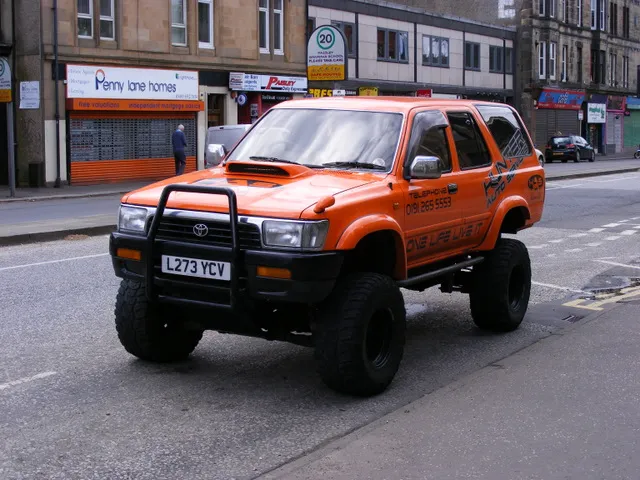
Photo: Thomas Nugent , CC BY-SA 2.0, via Wikimedia Commons
There's a moment every new off-roader knows well. You've just picked up your first capable rig, you're scrolling forums at midnight, and suddenly a 3-inch lift kit seems like the single most obvious thing you could possibly do. It's the gateway mod. The one that makes your truck look the part and—supposedly—perform the part.
Except here's what those forum threads don't always mention: that one upgrade doesn't exist in a vacuum. Your truck is a system. Mess with one corner of it, and you've just sent a ripple through every connected component. Sometimes that ripple is a manageable inconvenience. Sometimes it's a $4,000 lesson in mechanical humility.
Let's talk about what actually happens when you start modding without a plan.
The Lift Kit Domino Effect
A suspension lift is probably the most common first mod in the off-road world, and for good reason—it opens up tire clearance, improves approach angles, and frankly, looks aggressive in a way that gets the blood pumping. But slap a 3.5-inch lift on a stock JL Wrangler or a first-gen Tacoma and you've quietly introduced stress to a whole chain of components that weren't designed for the new geometry.
CV axles are usually the first to complain. At increased lift heights, the operating angle of your front axle shafts changes significantly. Stock CVs aren't built to handle that angularity under load, especially when you're airing down and flexing on the trail. The result? Accelerated wear, clicking on full-lock turns, and eventually, a CV boot that splits right when you're two hours deep into a trail in the Uwharrie National Forest.
Then there's the steering. Lift a truck without upgrading the track bar or adding a drop bracket, and your steering geometry goes sideways—literally. Death wobble is real, it's terrifying, and it's almost always a downstream consequence of a lift that wasn't paired with the right supporting mods.
And we haven't even touched on brake lines, driveshaft angles, or the fact that your factory bump stops are now basically useless.
When the Engine Tune Becomes the First Domino
Lifts aren't the only culprit. Performance tunes and programmer boxes are increasingly popular first mods, especially on diesel rigs like the Power Stroke F-250 crowd or Cummins Ram guys who want more pull for towing their trailers out to Moab.
Here's the thing about a tune: it's asking your engine to produce more power than it was factory-rated for. That's fine, in theory. But your transmission, torque converter, and driveline were all engineered around the stock power output. Add 80 horsepower and 150 lb-ft of torque through a tune, and you've just handed your transmission a workload it wasn't spec'd to handle.
We talked to a Colorado-based builder—let's call him Marcus—who dropped a hot tune on his '17 Ram 2500 before doing anything else. Within six months, he was looking at a rebuilt transmission. The tune had pushed torque peaks well beyond what the stock 68RFE was designed to absorb, especially during aggressive towing on mountain grades. His "cheap" first mod ended up costing him close to $3,500 in transmission work before he'd even bought a set of off-road tires.
"I wish someone had told me to build the drivetrain first," Marcus said. "The tune was supposed to be the easy win. It turned into the most expensive thing I've done to that truck."
The Tire Trap
Oversized tires are another deceptively complex first mod. Running 35s on a stock suspension might technically clear on some rigs, but the downstream effects are substantial. Your differential gearing is now working against you—engine RPMs drop at highway speeds, fuel economy tanks, and your throttle response feels sluggish because your gear ratios were calculated around smaller rolling diameter.
Worse, your factory brakes were sized for stock tires. More rotating mass means longer stopping distances. And your wheel bearings? They're handling a load they were never designed for. On-road, this plays out slowly. On the trail, when you're dropping into a steep descent on a loose shale surface in the San Juan Mountains, brake fade or a blown wheel bearing becomes a very different kind of problem.
The fix—regearing your differentials—is the right move, but it's also an additional $800 to $1,500 per axle that most first-time builders didn't budget for when they bought the tires.
Building in the Right Order
None of this is meant to scare you away from modding your rig. Quite the opposite. The point is that the best builds are intentional. They follow a sequence that respects the interconnected nature of your vehicle's systems.
Most experienced builders and off-road shops will tell you the same general philosophy: fix the foundation before you start stacking. That means:
- Address known weak points first. Before you lift, research what breaks on your specific platform at that lift height. Budget for those supporting mods upfront.
- Match your tires to your gearing. If you're going up in tire size, plan for a regear in the same budget cycle.
- Don't tune past your drivetrain's limits. If you want more power, build the transmission and driveline to handle it before you crank up the boost.
- Think in systems, not parts. Every mod should have a clear answer to the question: what else does this affect?
Shops like those you'll find at off-road expos in places like Las Vegas (SEMA) or the King of the Hammers pits will consistently echo this—the rigs that hold together on hard terrain aren't the ones with the most mods. They're the ones where every mod was planned with the next one already in mind.
The Real Cost of Impatience
Look, we get it. Patience is not exactly the dominant personality trait in the off-road community. When the trail is calling and your rig is sitting in the driveway half-stock, the urge to just start bolting things on is almost physical.
But the builders who end up with the most capable rigs—and the least heartbreak—are the ones who resist the impulse to grab the first shiny mod and start wrenching. They map out their build, they understand the dependencies, and they save up for the supporting components before they pull the trigger on the headline upgrade.
Your lift kit isn't just a lift kit. Your tune isn't just a tune. Your 35s aren't just tires. They're the first move in a chain reaction, and how that chain lands is entirely up to how well you planned it.
Build smart. The trail will still be there when you're ready.