Seven Trails That'll School Your Stock 4x4 Before You Spend a Dime on Mods
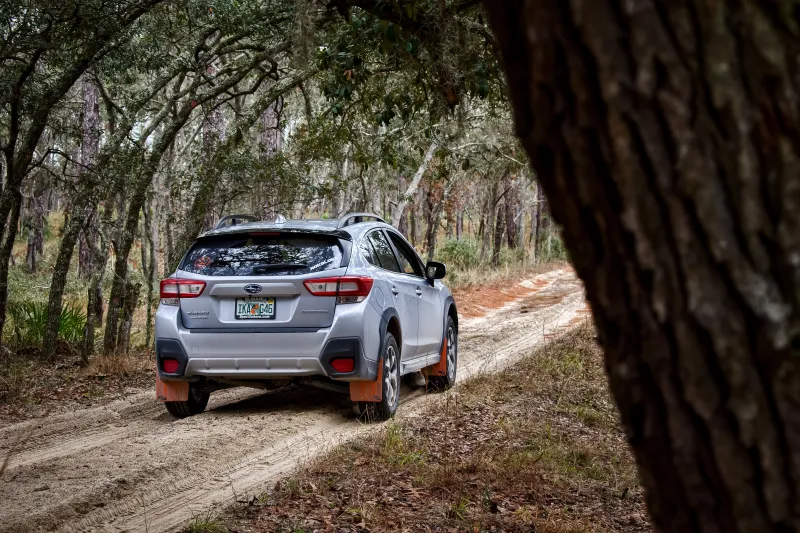
Photo: stock 4x4 SUV on forest service road trail scenic, via images.pexels.com
Every new wheeler gets the same advice — "build it slow" — and almost nobody follows it, because it's vague. Slow compared to what? Here's a concrete version: run these seven trails in your completely stock rig first. Each one teaches a specific skill, each one is doable on factory suspension with decent tires and a driver paying attention, and each one will show you exactly which mods your rig actually needs instead of the ones the internet says you need.
Before anything else: carry the basics on every run. Recovery gear (strap, shackles, rated points), a full-size spare, first aid kit, water, and a way to communicate that isn't hoping for cell service. That list applies to every trail below.
1. Fossil Creek Road, Arizona
What it teaches: Rock awareness and patience.
This forest service road north of Strawberry winds through a canyon with stretches of chunky volcanic rock that punish speed and reward finesse. Nothing here will high-center a stock rig, but the constant low-speed rock work teaches you to read a line ten feet ahead instead of two.
Skill takeaway: Pick your line before you're on it. Slow is smooth.
2. Slaughter Creek, Ouachita National Forest, Arkansas
What it teaches: Mud, water crossings, and committing.
The Ozarks and Ouachitas hide some wonderfully sloppy forest roads, and Slaughter Creek delivers a mix of clay-based mud and shallow water crossings that stock rigs handle fine — if you keep momentum and don't panic the throttle. Go after rain for the full education, or in dry season for a mellow intro.
Skill takeaway: Momentum is a tool, not a substitute for judgment. Walk the water crossing first, every time.
3. Schofield Pass Road (East Side), Colorado
What it teaches: Altitude, exposure management, and knowing your limits.
The full Schofield Pass route is not stock-friendly — we're talking about the gentler eastern approach from Crested Butte, which gets you up over 11,000 feet on a rough but manageable shelf road. The lesson here isn't technical; it's about how thin air, switchbacks, and drop-offs change your decision-making. Turn around if it doesn't feel right. That's a skill too.
Skill takeaway: Elevation affects your engine, your brakes, and your head. Learn all three.
4. Tellico's Lower Trails, Nantahala National Forest, North Carolina
What it teaches: Rooty, wet Eastern terrain and wheel placement.
The Southeast doesn't do desert ledges — it does slick roots, red clay, and off-camber root gardens. The easier lower routes around the old Tellico area give stock 4x4s a genuine workout in precise wheel placement and low-range crawling without requiring 35s and a locker.
Skill takeaway: Use 4-low early. Most beginners wait too long and ride the clutch or throttle instead.
5. Elkhorn Loop, Tillamook State Forest, Oregon
What it teaches: Sustained grades, rain, and self-awareness in the trees.
The Tillamook's gravel-and-dirt loop roads climb hard through clearcuts and timber, and when it's wet — which is most of the year — the traction puzzle gets interesting. Stock rigs do it regularly, but a rainy Elkhorn run will teach you more about tire behavior than a year of dry desert wheeling.
Skill takeaway: Your tires are only as good as the surface allows. Learn where grip actually disappears.
6. Michigan's Ribbon of Iron — Black River Forest Roads, Michigan
What it teaches: Sand, whoops, and long-haul pacing.
Up in the Upper Peninsula and northern Lower Peninsula, the forest sand roads are deceptively demanding. Loose sand on rolling terrain forces you to manage momentum for miles, watch for soft shoulders, and read the surface for buried whoops. Stock rigs eat it up — carefully.
Skill takeaway: Air down. Sand is the one surface where tire pressure matters instantly, and it's the best place to practice it.
7. Mojave Road (Eastern Sections), California
What it teaches: Self-sufficiency and the long game.
The full 140-mile Mojave Road is a bucket-list run and mostly doable stock with care — but even tackling the eastern sections teaches you what a trail day really costs: fuel planning, water math, navigation without bars on your phone, and driving smart enough that nothing breaks 60 miles from the nearest tire shop.
Skill takeaway: Recovery isn't just gear — it's planning that keeps you from needing it.
Why Stock First Actually Works
Here's the punchline. Run these seven and you'll come home with a real list: "I need better tires, the stock bumper approach angle cost me twice, and I have no idea how to work a winch." That's a build plan. Compare that to the guy who lifts his truck first and discovers on trail number one that he needed recovery gear, seat time, and patience way more than ride height.
Mods should solve problems you've actually experienced. These trails hand you the experience. Earn the scars, learn the skills, then spend your money where the trail — not the catalog — says it should go.